Every tech chasing a fully booked calendar is spending real energy on new client acquisition: content, DMs, referrals from strangers. That work matters. But the quieter, cheaper way to a booked-out calendar is the client who's already sat in your chair once. Getting them back costs you almost nothing compared to finding someone new, and it's the part of the business most artists leave entirely to chance.
The second booking is won before the client leaves your chair
Here's the thing most techs get backwards: they treat retention as something that happens after the appointment, in a follow-up text, a promo, a reminder. By then the decision is mostly made. A client who watched you work confidently, understood their aftercare because you explained it properly, and got a result that matches exactly what they were shown beforehand isn't leaving your chair wondering if they'll come back. They're already picturing their next set.
Which means the follow-up isn't where retention is won. It's where it gets confirmed or wasted. If the appointment itself felt rushed, improvised, or different from what they were expecting, no message you send afterwards is going to repair it. Most of the energy artists pour into "how do I get them back" is being spent at the wrong end of the problem.
Why your follow-up message gets ignored
There are two versions of this and almost every artist is running one of them. The first is the template: "thanks for booking, see you soon!" sent to everybody, which reads exactly like what it is and makes a client feel like a name on a list rather than someone you remember. The second is four months of silence followed by a "you're due for a refresh!" that arrives the same week your calendar starts looking thin. Clients can feel the difference between being checked on and being chased, and the second one quietly costs you the relationship you already paid to build.
The uncomfortable part is that knowing this doesn't tell you what to send instead. What you reference, how long you wait, and whether you mention a next appointment at all are the things that move reply rates, and getting any one of them slightly wrong is what turns a warm client into someone who leaves you on read. Most artists never learn which part they got wrong, because a message that fails simply gets no answer.
The next set gets planted during the first one
Most artists finish a set, take the photo, and the conversation about what comes next never happens. Four months later they're trying to start that conversation cold, over text, from nothing. It's a far harder conversation than the one that was sitting right there while they were in your chair, delighted, looking at their new smile in the mirror.
Planting the idea of a next set isn't upselling, and artists who do it well aren't selling at all in that moment. But the line is narrow. The same thought offered slightly wrong lands as a technician trying to squeeze another booking out of a client who just paid, and that reads cheap. When you raise it, how you frame it, and which clients you raise it with at all is the difference between a client who leaves curious and one who leaves guarded.
What you can control either way is what they're looking at. When you lay a set out on a proper smile map before the appointment, you're not just selling the current booking, you're showing them what's possible with their smile in a way a rushed in-chair sketch never could. A client who can see the full range of what you're capable of is already curious what else you could design for them, before anyone has said a word about a second appointment.
You can't reference what you never recorded
The single biggest retention advantage a small business has over a big one is that you can remember your clients as people, not appointment slots. A client who returns eight months later and hears you casually reference the set they had last time, or the shade they went with, or a detail they mentioned about an upcoming event, feels like they're being seen, not processed.
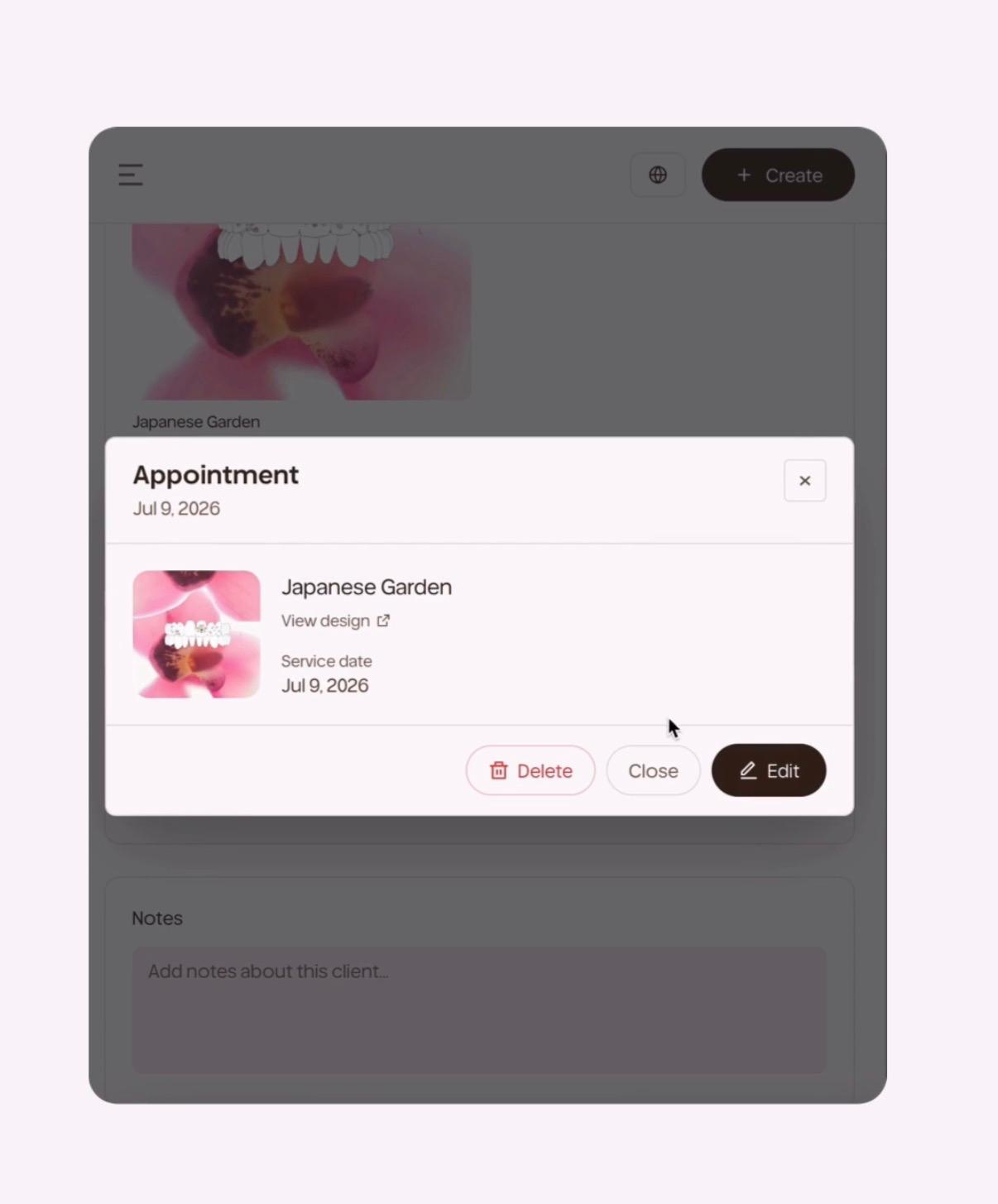
Memory alone doesn't scale past a certain client count, and that's the point where most artists quietly lose the exact thing that made them worth returning to. A real service history is what fixes it: every design, service date, before and after photo, and note tied to the client it belongs to, instead of scattered across screenshots, old DMs, and a camera roll you'd have to scroll for twenty minutes. Smile Map keeps that history against each client record, so when they rebook months later you open their profile and walk in already knowing what you set, when, and what they liked. Whatever you decide to say to them, this is what makes it possible to say anything specific at all.
Why "it's been a while, want to book?" never lands
A reason to return doesn't have to be manufactured. Birthdays, holidays, formals, wedding season, a milestone trip: your clients are already thinking about refreshing their look around these, and they will do it with somebody. The artists who don't get that booking aren't missing the occasion. They're missing that a generic nudge sent in a generic week reads as a business that needs money, not an artist who was thinking about them.
Specificity is the whole game here, and it's harder than it sounds. Which occasions are worth reaching out for, how far ahead of one you reach out, and how often you can do it before a client starts skimming past your name are the calls that decide whether this becomes a reliable second booking or a slow way to train someone to ignore you.
The referral discount reflex, and what it trains
Referrals are one of the strongest growth tools you have, and the default way artists reach for them damages the business on the way through. A blanket discount code trains every client, referred or not, to expect a markdown, and that habit is very hard to undo once your client base has learned it. You end up paying for growth out of the price of every future appointment, including all the ones that had nothing to do with a referral.
A referral should feel like a personal thank-you between you and a client who trusts you enough to send someone your way, not a marketing funnel with a percentage attached. Building one that rewards them properly without touching what you charge is a structural decision, and most artists only get around to making it after they've already trained their clients to wait for the code.
A discount and a reason to return are not the same thing
It's tempting to reach for a price cut when you want someone back in your chair. It's also usually the wrong move. A discount gets you a booking. It doesn't get you a client who chose you because of you. Discount-driven clients tend to shop the discount again next time, wherever it's offered, and that's not the relationship a fully booked, premium tooth gem business is built on.
A reason to return is something else entirely: a client who remembers how good the last experience was, who trusts your eye enough to try your next design idea, who feels genuinely known by you when they walk back in. That kind of loyalty doesn't come from your price. It comes from the experience, the memory, and the relationship you built the first time. It's slower to earn than a discount, and it's worth infinitely more once you have it.
Retention is a system, and hoping is not one
None of this happens by accident for the businesses that stay consistently booked out. They're not hoping clients remember to come back. They're running something deliberate: a first appointment built to be remembered, a follow-up that earns a reply, real records of who each client is, and reasons to reconnect that don't cost them a cent of margin. It runs the same way every time, which is why their calendar fills whether or not they felt like posting that week.
You can see the shape of that system from here. What you can't see from here is the sequence: what gets said, when, and to which client. That's the part The Gemist Hub Academy spent four years working out.
Related reading
Frequently asked questions
When does a client actually decide to rebook?
Usually during the first appointment itself, not after. How organized you are, how clearly you explain aftercare, and how closely the finished set matches what they were shown beforehand all shape whether they are already picturing their next set before they leave your chair. A follow-up message can confirm that decision. It rarely reverses one.
Should I offer a discount to get clients to come back?
Discounting attracts clients who are shopping on price rather than loyalty, and it trains your whole client base to wait for a deal instead of booking because they want you specifically. The harder question is what to put in its place, because "be more personal" is not a plan. Building a return offer and a referral reward that never touch your pricing is what The Gemist Hub Academy covers in the masterclass.
What should I actually say in a follow-up message?
Not a generic "thanks for booking." Past that, the honest answer is that the wording is the whole thing: what you reference from the appointment, how long you leave it, and whether you mention rebooking at all decide whether they reply or leave you on read. Most artists never find out which part they got wrong, because a message that fails simply gets no answer. The Gemist Hub Academy teaches the sequence in the masterclass.
How do I remember details about clients I only see occasionally?
Keep a real service history, not memory. When a client’s design, preferences, photos, and last service date are recorded against their profile, you can reference specifics from months ago without asking them to remind you. Smile Map ties that history to every design you’ve built for them, so the detail is sitting there the moment they book again.