
Let's start with the honest bit: most techs never make the jump. Not because they aren't talented. I've seen genuinely gifted artists stay stuck doing $30 single gems out of their bedroom for years. They stay stuck because nobody ever told them the thing I'm about to tell you. Tooth gems isn't a craft you're good at. It's a business you run. Once you actually believe that, everything else in this guide clicks into place.
The mindset shift: you're the artist AND the CEO
When I started, I thought my only job was to be good with my hands: get the placement clean, get the bond strong, make it sparkle. That's maybe 30% of the job. The other 70% is business: pricing, positioning, presenting your work like it's worth what you're charging, and treating your client list like the asset it actually is.
The artists who stay stuck as a "side hustle" forever are the ones who never put the CEO hat on. They're waiting for the work to speak for itself. It doesn't. You speak for it, through how professional your process looks, how confidently you quote, and how seriously you treat your own time. The moment you start operating like the owner of a real tooth gem business instead of someone with a side gig, dream clients start treating you like one too.
The essentials to get started
None of this is glamorous, but skip it and you'll be rebuilding your reputation from a hole instead of a clean start. Get these right first:
- Get properly trained. Whether that's a certification course, an apprenticeship under a working tooth gem technician, or a structured program, invest in real training before you touch a client's teeth. This is a craft with real technique behind it, and "I watched some videos" is not the same as being trained.
- Build a proper kit. Professional-grade bonding materials, a full range of gems, good lighting, a clean workstation. Cutting corners on your kit shows up in your results, and your results are your entire marketing budget.
- Take hygiene and safety seriously. Sterilization protocol, single-use where it matters, a genuinely clean space. This isn't optional professionalism. It's the baseline that separates a tech from someone doing this in a bathroom.
- Get consent and insurance sorted. A proper consent form and appropriate insurance aren't paperwork for paperwork's sake. They're what tells a client "this person runs a real business," before you've even started the appointment. It's also just how you protect yourself.
Get the fundamentals locked in first. Everything below is about turning that solid technical foundation into an actual business that pays you what you're worth.
Design like a pro from day one
Here's a mistake I made early on: I'd quote a client on a rough idea, place the gems, and hope they loved the result. Sometimes they did. Sometimes the "surprise" wasn't the good kind, and that's a brutal way to run a business: your income tied to a coin flip every single appointment.
The fix is simple to say and genuinely changes everything: design the full look before you place a single gem. Not a mental picture, not a rough sketch on a napkin. An actual custom smile map your client can see and say yes to. That's exactly why I built Smile Map the way I did. You lay the whole set out on a realistic 3D tooth map, style it as one cohesive collection, and send your client a clean, view-only link before you ever pick up a gem. They see precisely what they're paying for. You walk into the appointment with a sold client instead of a hopeful guess.
This one habit alone will change how people perceive you. A napkin sketch says hobbyist. A polished smile map says business.
Why your portfolio isn't selling while you sleep
Your portfolio should be your best unpaid employee. Working while you sleep, while you're with another client, while you're on holiday. For most techs it isn't doing any of that, because it isn't a portfolio. It's a camera roll: every set you've ever placed, posted in the order it happened, the rushed ones sitting right next to the ones you're proud of.
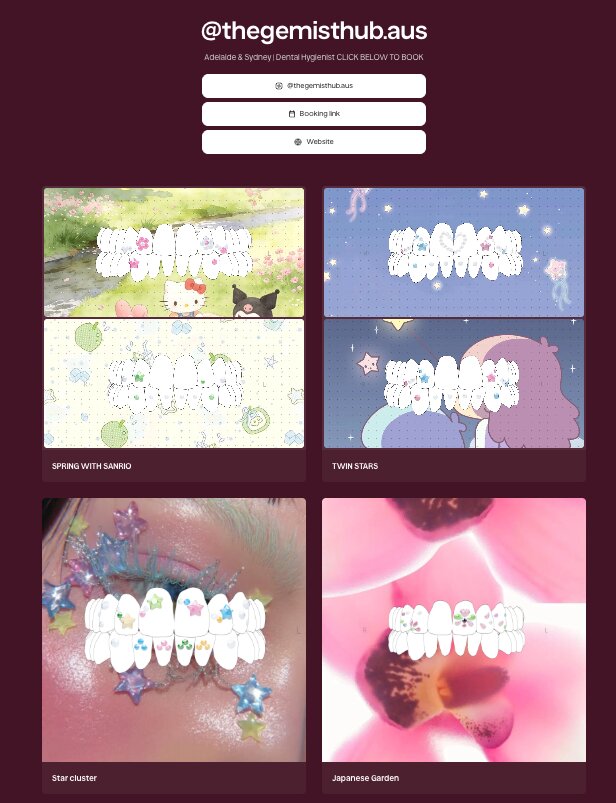
That costs you in a way you'll never see, because the woman who scrolls it and doesn't message you never tells you why. She isn't judging your best work. She's averaging everything in front of them, and a feed that shows everything averages down to whatever your weakest set looks like. Then they ask how much, because nothing they saw gave them a reason not to.
Having somewhere proper to put it is the easy half, and that's what Smile Map's public portfolio is for. Every finished design you build in the studio can live on a custom-slug portfolio page, grouped however you want to present your style, on one clean link in your bio that's open to anyone who finds you at 2am scrolling Instagram. Stop treating finished work like it disappears after the appointment. Every design is a permanent asset.
The hard half is what goes on it. Which sets earn a place and which ones quietly cost you money by being there. What to cut even though it took you three hours. How to group the work so a stranger reads a style instead of a timeline, and which pieces to lead with so the clients you actually want see themselves in it first. Those are decisions, not settings, and they're the difference between a portfolio that records your work and one that books it.
Why you keep attracting price-shoppers
This is the part that decides whether you're exhausted and underpaid or genuinely thriving. Price-shoppers and dream clients aren't two budgets of the same person. They're different people entirely, and they respond to completely different signals.
So if your DMs are full of "how much for one gem," that isn't bad luck and it isn't your area. It's a signal you're sending. Somewhere in what a stranger sees first, your feed, your bio, how you answer that first message, how you hand over a quote, you're telling them the sensible thing to do is compare you on price. So they do. A dream client never opens with "how much." They open with "when can I get in," because everything they saw had already settled the price question before they typed.
The expensive reflex here is trying to fix it with the number. Artists raise their rate, hope better clients turn up, and end up with a quieter inbox full of exactly the same enquiries. Nothing about the invitation changed, so nothing about who accepted it changed either.
Which means the real question was never what to charge. It's what a stranger concludes about you in the few seconds before they decide whether to message at all. That's positioning, and it's built deliberately: what you show, what you refuse to show, how you talk about your own work, and what happens in the first two messages. It's the thing I spend the most time teaching, because it's the whole difference between chasing bookings and choosing them.
Keep records like a business, not a hobby
Somewhere around client 100, I realized I couldn't remember who'd had what design, when they were last in, or what they'd consented to. That's not a small problem. It's the difference between running a business and running chaos with good lighting.
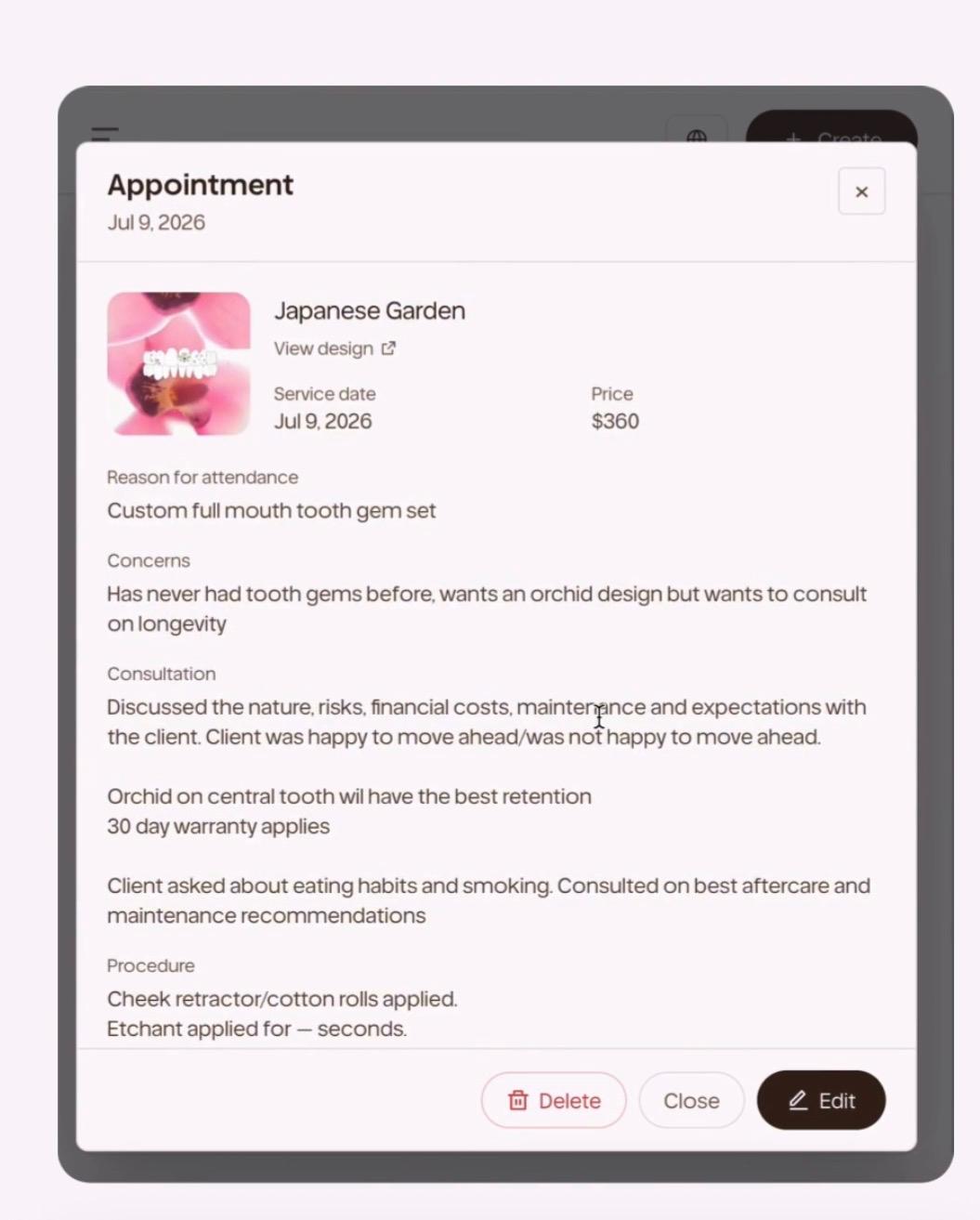
A real business keeps real records: client contact details, how they found you, consent and photo permissions on file, and a full service history tied to every design you've ever built for them. This is exactly why client records live inside Smile Map alongside your designs. Every attribution links a finished smile map back to the client it belongs to, so your history is there when you need it, not scattered across screenshots and old texts.
It's not glamorous. It's also what makes you look, and actually be, like someone running a real business instead of a side project that got popular.
You already have what it takes
I quit my full-time job on the back of this craft, and now I have four-figure days working one day a week. Not because I got lucky, but because I stopped treating it like a hobby and started running it like a business. If you recognised yourself anywhere in this, that's the useful part. You don't need it all figured out today. You need to start treating your work like the business it already is: design like a pro, put your finished work somewhere that never clocks out, and keep records that make you look, and feel, like a CEO.
If you want the exact strategy behind attracting dream clients and turning cold DMs into full-price bookings, that's what I teach inside The Gemist Hub Academy. Smile Map is the studio you run it all from.