
Why aftercare is a business move, not just a courtesy
A lost gem, a chipped setting, or a client who genuinely didn't know what to avoid. Those are the moments that cost you referrals. Good aftercare isn't paperwork. It's the difference between a client who comes back for a touch-up in eight months and posts about you, and one who quietly disappears after a gem falls out and blames the work instead of a missed instruction. The artists who treat aftercare as part of the service, not an afterthought, are the ones building repeat clients and word-of-mouth bookings.
The first 24 hours
The bond needs time to fully set, so the first day after a set is when a client is most likely to undo good work without meaning to. Walk them through this every time:
- Stick to soft foods and lukewarm drinks.
- Avoid chewing directly over the gem, even with soft food, for the first day.
- No chewing gum at all in the first 24 hours.
- Brush gently as normal, but skip flossing right around the gem for the first 24 hours.
- No whitening strips, whitening toothpaste, or mouthwash with strong abrasives yet.
- Skip smoking or vaping directly after the appointment if the client can help it. Heat and suction stress a fresh bond.
What foods should you avoid after your tooth gem service?
Anything too hard, crunchy, or chewy — and not just for the first day. This is the part clients most often get wrong, because "be careful for 24 hours" sounds like permission to go back to everything on day two. Give them the actual list instead:
- Vietnamese bread roll
- Pork crackling
- Chewing gum in the first 24 hours
- Hard crackers
- Nuts
- Pizza crust
- Hard toast or bread slices
- Sticky protein bars
- Rocky road chocolate
- Redskins
- Hard candy
A named list beats a category every time. "Avoid hard foods" gets nodded at and ignored; "no pizza crust, no pork crackling, no hard toast" is something a client can actually follow at dinner. Put it in writing and attach it to their record so it is there when they need it, not just said once in the chair.
The first week and beyond
Once the first day has passed, most clients can go back to normal life, but a few habits make the difference between a gem that lasts and one that comes back to your chair early:
- Avoid biting ice, hard lollies, nuts, or anything that puts direct pressure on the gem.
- Keep up a normal brushing and flossing routine. Clean teeth hold gems better, not worse.
- Steer clear of whitening treatments and strong abrasive polishes for as long as the gem is in place. They can dull the setting and weaken the bond.
- If a mouthguard or retainer is part of the client's routine, make sure it doesn't rub directly against the gem.
- Book a routine dental check-up as normal. A tooth gem does not change a client's regular dental care.
Do
- Eat soft, chew gently for the first 24 hours
- Keep brushing and flossing the rest of the mouth normally
- Book a check-in or touch-up appointment when it's due
- Reach out if anything feels loose or off
Don't
- Bite ice, hard lollies, or nuts directly on the gem
- Use whitening strips or abrasive toothpaste on the gem tooth
- Pick at or press on the gem to "test" it
- Skip their next routine dental check-up
How long does a tooth gem actually last?
Set this expectation at the appointment, not months later. Tooth gems are non-permanent. Most last anywhere from several months to a couple of years depending on the bonding method, the tooth, and how the client treats it. That's not a downside; it's part of what makes them appealing. Clients who know it's normal to come back for a touch-up or a fresh set are the clients who become repeat bookings instead of one-off appointments.
- 0 to 24 hours: the bond sets. Soft foods, gentle brushing, no whitening.
- 1 week to 1 month: normal habits resume, but the gem is still settling. Avoid direct pressure.
- 3 to 6 months: a good checkpoint to remind the client to book a look-over.
- 6 to 24 months: typical lifespan window; timing varies by client and gem type.
Handing it over like a professional, every single time
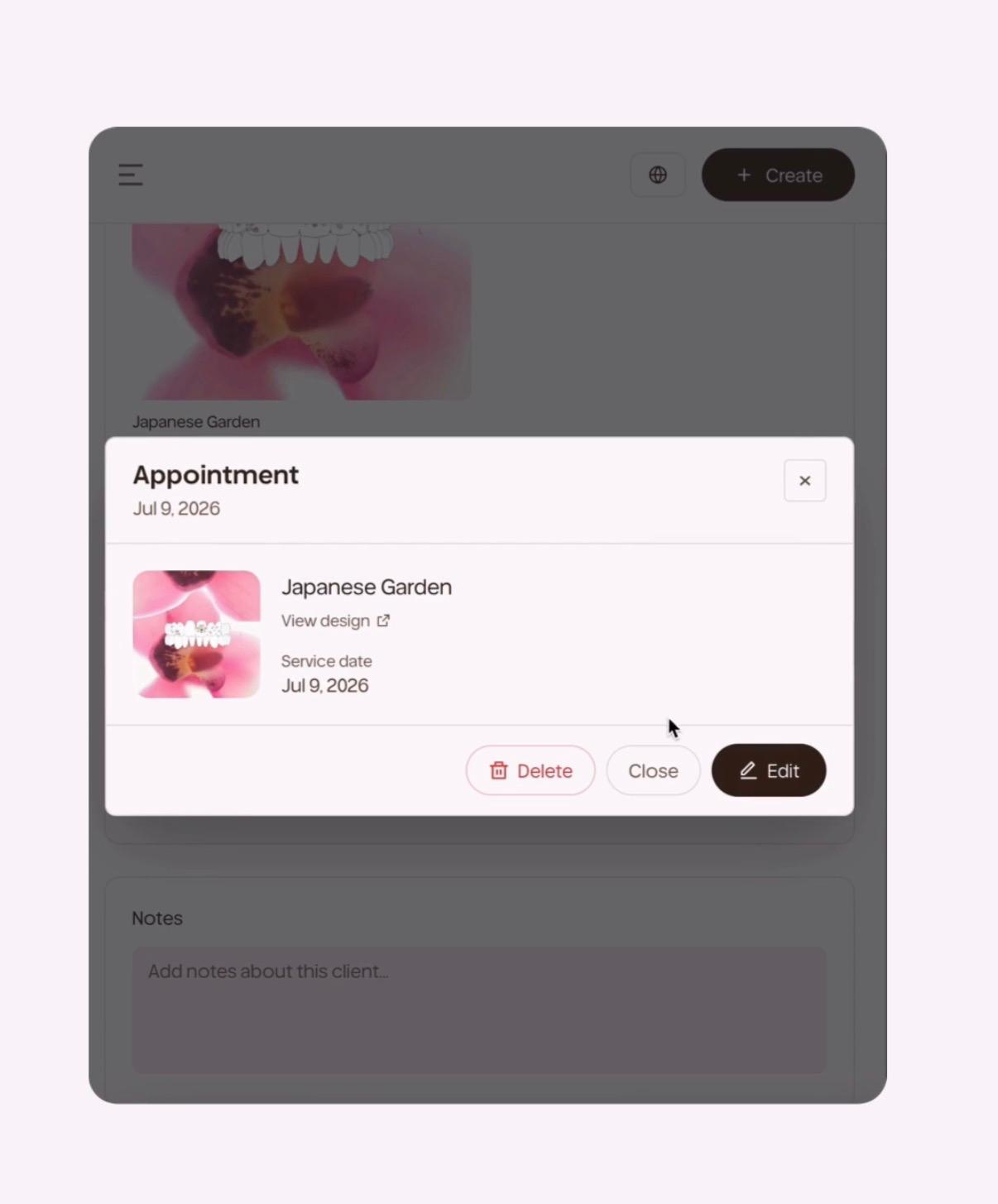
The artists who build a real business don't rely on memory to know what they told a client last time. This is exactly what Smile Map is built for. Every client gets a record, every appointment gets logged against their history, and you always know precisely what aftercare guidance you gave and when. Hand your client the same clear instructions every time, and have the receipt to prove it if a question ever comes up later. It's the kind of small, consistent professionalism that turns a first-time client into a five-year client.
Disclaimer: This is general guidance for artists to adapt for their own business and clients. It is not a substitute for a dental professional's advice. Clients with pain, infection, or ongoing concerns should see a dentist.