
Two techs can post the same number of times a week, get similar engagement, and end the month with wildly different booking calendars. The difference is not luck and it is not the algorithm. It is that one of them is posting content built to move someone toward a DM, and the other is posting content built to just look good. Here is what the second one is doing wrong.
Why your prettiest posts are not the ones that book
Likes and bookings are not the same signal, and chasing one does not guarantee the other. A beautifully lit close-up with soft aesthetic styling can rack up likes while giving a viewer nothing specific to want. The posts that actually book have one thing in common: they make someone think "I want that exact thing," not just "that is pretty." Most feeds are almost entirely the second kind.
That is a decision, even when it gets made by accident. Which post types belong in a feed built to book, how often each one needs to appear, and what a stranger has to see before they are willing to message you about their own tooth gem set are choices most artists never make on purpose. They post whatever looked good that week and let the algorithm sort it out. That is why two Techs with the same hands end the month with very different calendars.
Before and after posts that reflect the client
An engaging before and after transformation is one of the strongest conversion formats for a gem tech. The key to optimising this type of content is to frame it as a transformation, not just "showing the tooth gems". When the aesthetic of the client and the transformation is aligned, the outcome becomes amplified, resulting in higher engagement and shareability.
The before is neutral, well lit, and simply "here is the starting point" — not a photo chosen to look worse than it needs to. Always get clear consent for before and after photos, and be upfront with clients about how you plan to use them. A client who feels good about how they were shown will happily let you post the next one too, and repeat permission is worth more long term than one dramatic post.
Why smile maps outperform finished-work-only feeds
A feed of only finished work shows what you have already done. It is proof, and proof matters, but it is passive. A smile map does something a finished photo cannot: it shows a viewer a specific, styled look they have not committed to yet, and invites them to imagine it as their own. That is the difference between "look what I made" and "this could be you," and the second one is what actually moves someone to message you.
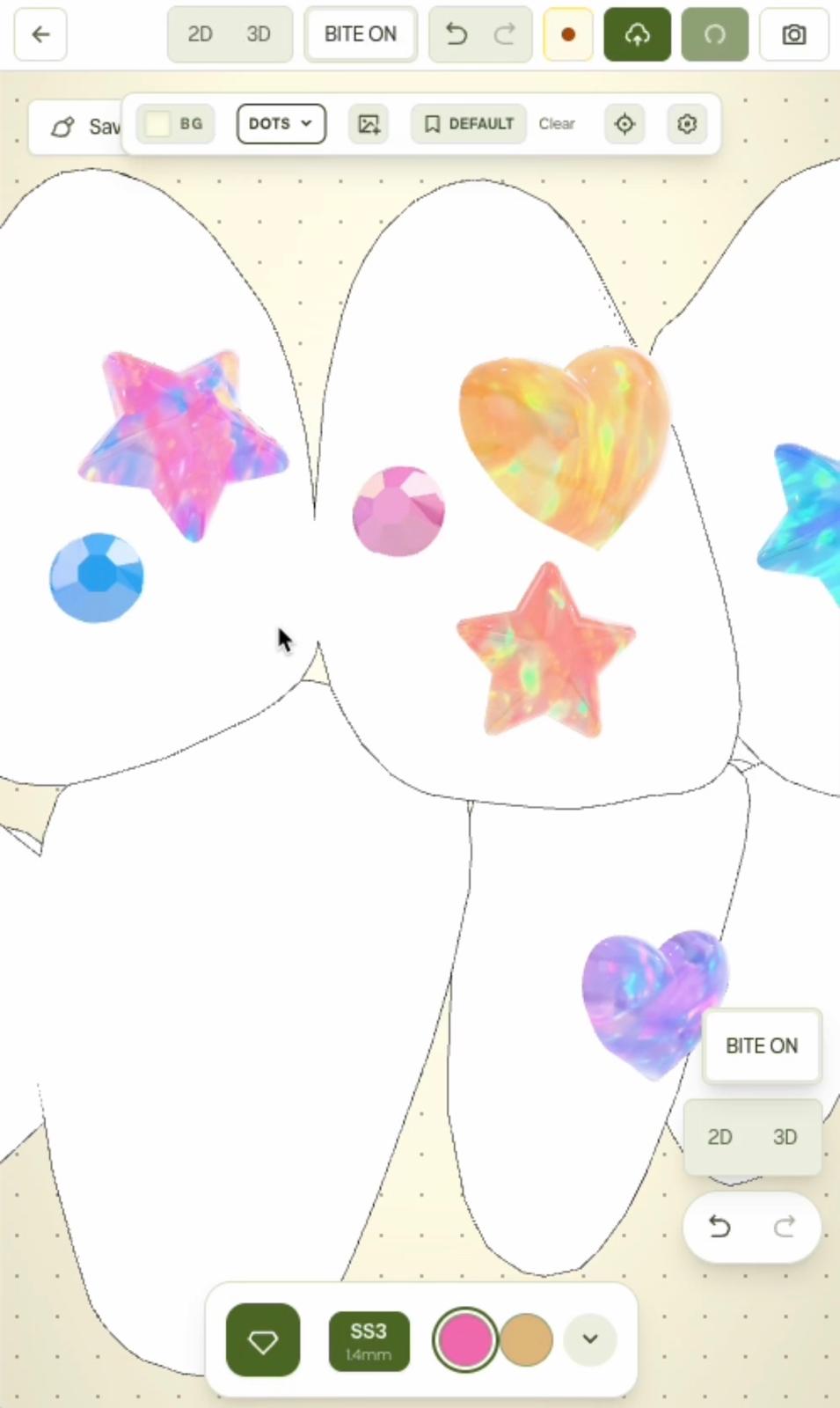
This is exactly why we built Smile Map's design studio to be shareable, not just an internal planning tool. A polished mockup, built on a realistic 3D tooth map and posted or sent as a clean link, gives a follower something concrete to react to. It also gives you an easy content format that does not require a finished client appointment to post: you can design and post new looks between bookings, keeping your feed active without needing a fresh gem placement every time.
The caption is where most feeds quietly stop selling
A caption that only describes what is in the photo ("gorgeous set for this client today") gives a viewer nothing to do next. They like it, they keep scrolling, and the moment is gone three posts later. Every caption you publish is either quietly inviting a DM or quietly not, and most artists have never decided which one theirs are doing.
Writing a caption that invites a DM is harder than bolting "DM me to book" onto the end. What makes a stranger comfortable enough to start a DM enquiry about their own teeth, and what you say in the first two replies once they do, is where an enquiry becomes a booking or dies politely. Most techs lose the sale in those two messages without ever noticing it happened.
Why you answer the same five questions every single week
Your highlights are doing a job whether you set them up on purpose or not. A visitor who lands on your profile has a handful of predictable questions: roughly what does this cost, how does booking actually work, is this safe and hygienic, how long do the gems last. If your profile does not answer them, you answer them by hand in every conversation, which is time you are not spending on the clients who were already ready to go.
The artists who never have that conversation are not typing faster. They have put the answers where a lead finds them before they send a DM, and, more importantly, they have decided how much to say about money in public and how much to hold for the DM. That one decision changes who arrives in your inbox: someone ready to book, or someone still comparing you against the cheapest option in town.
A feed is a system, not a stack of posts
None of this means posting more. It means knowing what each post is actually for, and most feeds have never been asked that question. The gap between a profile that looks like a gallery and one that fills a calendar is not effort, frequency, or luck. It is intent, applied post by post, and it compounds quietly once it is in place. If you are also working on the link in your bio itself, our portfolio tips guide covers how to make that single link close as hard as your best post.