
"How long will this last?" It's not really a technical question. It's a trust question. What your client is actually asking is "am I about to waste my money," and how you answer in that first thirty seconds tells them everything about whether you know what you're doing. Get it right, and you've just built trust before you've placed a single gem. Get it wrong, either by overselling or by looking caught off guard, and you've planted a seed of doubt that follows the whole appointment.
The honest range, and why it's a range at all
In practice, tooth gems commonly last anywhere from several months to a couple of years. That's a wide window, and it's wide on purpose. Anyone giving you a single, tidy number is either guessing or hasn't been doing this long enough to see how many variables actually go into it.
What moves a gem from "gone in six weeks" to "still there two years later" usually comes down to a handful of things:
- Prep and isolation. A clean, dry, properly isolated tooth surface at the moment of bonding is the single biggest factor in your control. Moisture contamination during bonding is the quiet cause behind most early failures.
- Bonding technique and product choice. Different bonding agents and techniques behave differently, and staying current with what you're using, what techniques work in 2026 and why it works, matters more than chasing whatever's trending.
- Tooth and placement selection. A gem placed somewhere that takes direct bite pressure is working against physics. A tooth gem that's unfit for the tooth could also cause more harm than just popping off. Checking bite clearance before you cure is a non-negotiable.
- The client's own habits. Ice chewing, nail biting, medications, drugs, whitening treatments, a mouthguard or retainer all add to the picture. You can control your technique. But you cannot control what happens after they leave your chair, and that's exactly why the consultation and personalised aftercare matters as much as the placement.
Why over-promising costs you more than the honest answer ever will
It's tempting, especially early on, to give the answer that sounds most reassuring in the moment. "Oh, these last years." It feels like the version that closes the booking. In practice, it's the version that costs you a redo, an awkward conversation, and sometimes a client who tells three friends you did shoddy work, when the real story is they bit down on ice for two months straight.
A vague overpromise isn't kindness. It's a liability you're quietly taking on without meaning to. The moment that gem comes off earlier than the number you casually threw out, you're the one holding the redo, the awkward conversation, and the dent in your reputation, even though nothing you did was actually wrong. Set the range honestly up front, and a gem that comes off in month four isn't a failure. It's exactly what you told them could happen.
Longevity is a care conversation, not a warranty
The reframe that changes everything: you are not promising a lifespan. You are describing a range, and handing over the habits that push a client toward the long end of it instead of the short end. That's a completely different conversation, and it's one that makes you look like the expert instead of someone hoping for the best.
Think of it the way you'd talk about a good haircut or a manicure. Nobody expects a guarantee on either, but a good stylist or tech still tells you how to make it last. Same principle here. "This commonly lasts several months to a couple of years, and here's what actually makes the difference" is a sentence that builds confidence. "This will last forever" is a sentence you'll eventually have to walk back.
Where most artists handle this badly
The common mistake is waiting for the client to ask. By the time they raise it, you are answering a worry instead of setting an expectation, and everything you say afterwards sounds like defence. The artists who never have an awkward longevity conversation are the ones who bring it up first, before it can become a concern.
The second mistake is treating the eventual return visit as a failure to apologise for rather than the normal, expected next appointment. How you frame that single point decides whether a client comes back to you in a year feeling good about it, or quietly books elsewhere because they assumed something went wrong. For the specific do's and don'ts to hand over after the appointment, that is covered in full in our tooth gem aftercare guide. Keep the consult conversation on expectations, and let the aftercare handover do the detail work.
Keep a record so the follow-up conversation is easy
Here's where a lot of artists lose the thread months later: a client messages asking "hey, is it normal that mine's still going strong" or "can you remind me what you used," and there's no record to check. You're reconstructing it from memory or an old text thread, and that's not the confident, organized impression you want to leave.
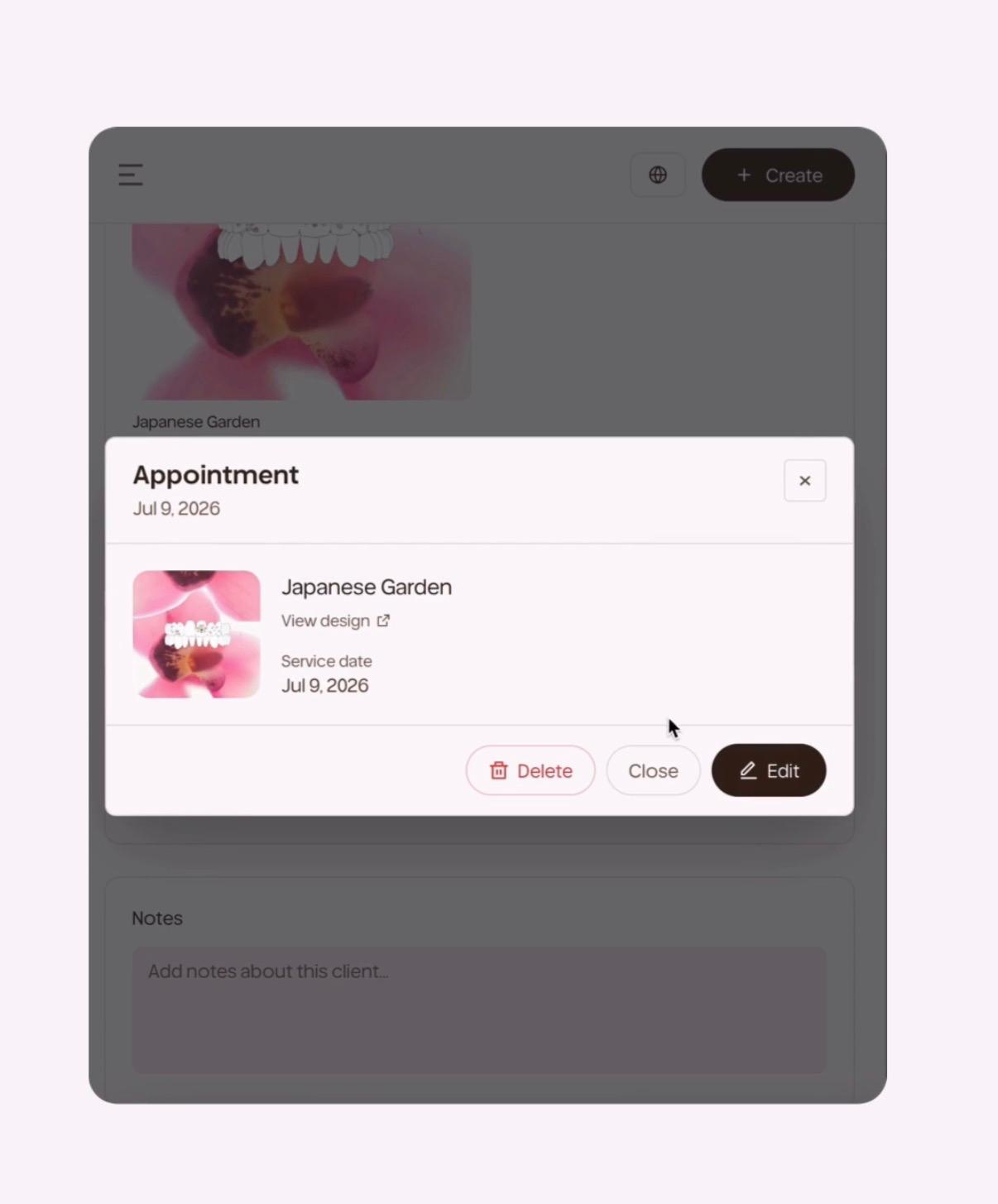
This is exactly why keeping a written record of the placement date, the design, and the materials matters as much as the appointment itself. Inside Smile Map, every finished design is tied to the client it belongs to, with the service date on record. When someone messages you eight months later asking about their gem, you're not guessing. You're pulling up the exact smile map you built for them and answering with specifics. That's the difference between "I think it was around spring" and "you were in on March 14th, here's exactly what we placed." One of those answers makes a client trust you more, not less.
The honest answer is the one that keeps clients coming back
You're not in the business of promising forever. You're in the business of doing excellent work, setting expectations that match reality, and making the eventual touch-up feel like a normal part of the relationship instead of a letdown. Say the range honestly, explain what actually drives it, and keep a record so you never have to guess. Clients don't remember the artist who promised the moon. They remember the one who told them the truth and then delivered exactly what they said they would.