
You worked hard to become a tooth gem technician. The technique, the products, the eye for a set that actually flatters a smile. That is craft. Consent and record-keeping is the other half of running a real tooth gem business, and it is the half most artists skip until something goes wrong.
Why consent and records actually matter
A signed consent form is not paperwork for paperwork's sake. It is what separates a professional tooth gem business from someone freelancing out of a kit bag. It protects you if a client forgets what you told them about wear time, disputes a charge, or shows up somewhere else claiming they were never warned. It protects the client by making sure they actually understood what they signed up for before you touched their teeth. And it builds trust. A client who fills out a proper intake before you start believes, correctly, that they are in professional hands.
It also pays off on the business side. Clean records mean you can look up exactly what a repeat client had done, when, and with what gems. No guessing, no re-asking questions you already asked six months ago. That is what turns a one-off set into a client you keep for years.
What a good tooth gem consent form covers
Every business's form will look a little different, but a solid one covers the same ground:
- Photo and marketing consent. Get explicit, separate consent for before/after photos, portfolio use, and social media. Do not assume. Ask, and record the answer.
- Medical, dental and allergy disclosure. A section where the client discloses any known allergies, sensitivities, medications, or dental conditions relevant to the placement. Dental history belongs here alongside allergies, not as an afterthought — existing restorations, recent whitening, and orthodontic appliances all change what you can safely do.
- Tooth gem removals. Tooth gem removals should only be performed by a registered dental professional at a dental clinic. Non-professional tooth gem technicians and clients should not attempt to remove tooth gems in their studio, or at home. Say so on the form, so the client knows where to go before they try to prise one off themselves.
- Aftercare acknowledgement. Confirmation the client has read and understood your aftercare instructions, not just that you handed them a printout.
- Understanding of the non-permanent nature. Tooth gems are not forever. Your form should confirm the client understands the gem may need replacement or removal over time.
- Minor / guardian note. If you work with clients under 18, a parent or guardian consent line. Check what your region requires before you take a minor client at all.
Sample checklist: adapt to your business
What to include on your consent form
- Client name, contact details and date of the appointment
- Confirmation the client understands tooth gems are non-permanent and will need removal or replacement over time
- Medical, dental and allergy disclosure: known allergies, sensitivities, medications and dental conditions relevant to the placement
- Acknowledgement that removals are performed by a registered dental professional at a dental clinic, never at home
- Acknowledgement the client has read and understood your aftercare instructions
- Photo and marketing consent: explicit yes/no for before/after photos, portfolio use and social media
- For minors: parent or guardian name, relationship and signature (check your local age rules)
- Client signature (or digital equivalent) and date
This is general guidance, not legal advice. Consent requirements for cosmetic body procedures vary by region and can change. Check the rules that apply where you work and adapt your form accordingly.
Stop keeping consent in your camera roll
Here is where most tooth gem businesses fall down: not the form itself, but where it lives afterward. A screenshot of a signed PDF buried in your camera roll, next to five hundred reference photos, is not a record-keeping system. When a client comes back eight months later, you are scrolling to find whether you actually got photo consent, or what gems you used last time.
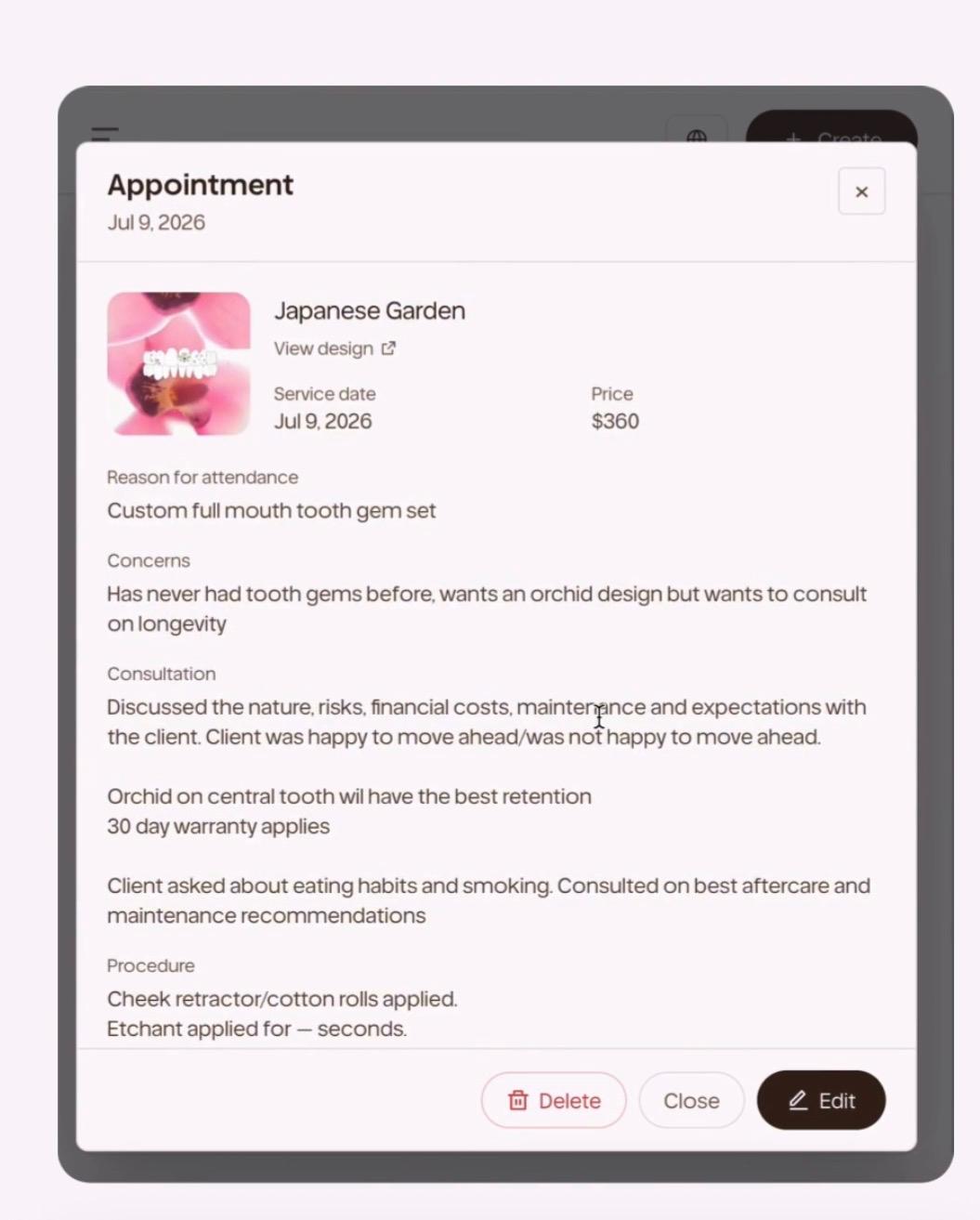
Smile Map's client records keep every consent, service date, and design tied to the client it belongs to, not floating in your camera roll. Open a client, and you see their full history: what you set, when, whether photo consent was given, and every smile map you built for them. Your appointment and service log builds itself as you work, instead of you rebuilding it from memory every time a client returns.
Run consent and record-keeping properly, and it stops being a chore. It becomes proof you run a real business. That is what clients pay a premium for.
Frequently asked questions
Do tooth gem artists need consent forms?
A written consent record is standard practice for any tooth gem business doing cosmetic work on a client’s teeth. It protects you if a client forgets what was agreed, disputes a result, or needs to be reminded of aftercare, and it signals to every client that they are booking with a professional, not a hobbyist.
What should a tooth gem consent form include?
At minimum: client contact details, disclosure of allergies or dental conditions, confirmation the client understands the gem is non-permanent, aftercare acknowledgement, and explicit photo/marketing consent. See the sample checklist above and adapt it to your business and region.
How do I store client consent?
Tie it to the client record, not a folder of loose paperwork or camera roll screenshots. In Smile Map, consent and photo permissions live against the client alongside every design and service date, so you can find it again in seconds, months later.